


04/09/2026
Renewables Reach Half Of NI's Power Demand In Year To June 2026
The Department for the Economy has published its 'Electricity Consumption and Renewable Generation in Northern Ireland: Year ending June 2026' statistics, which support monitoring of the Energy Strategy 'Path to Net Zero Energy' and the Climate Change Act target to "ensure that at least 80% of electricity consumption is from renewable sources by 2030."
Following data development work, measurement and reporting now use the Gross Final Electricity Consumption (GFEC) approach. GFEC is defined as generation plus imports minus exports, and is equivalent to total electricity demand. This is the third quarterly publication on the new basis, after the first release in March 2026, with historic trend data provided back to 2018.
From July 2025 to June 2026, renewable generation totalled 4,431 GWh, equating to 50% of GFEC (8,865 GWh). That share is up from 44% in the year to June 2025 and matches the previous record high seen in late 2022/early 2023 (50%).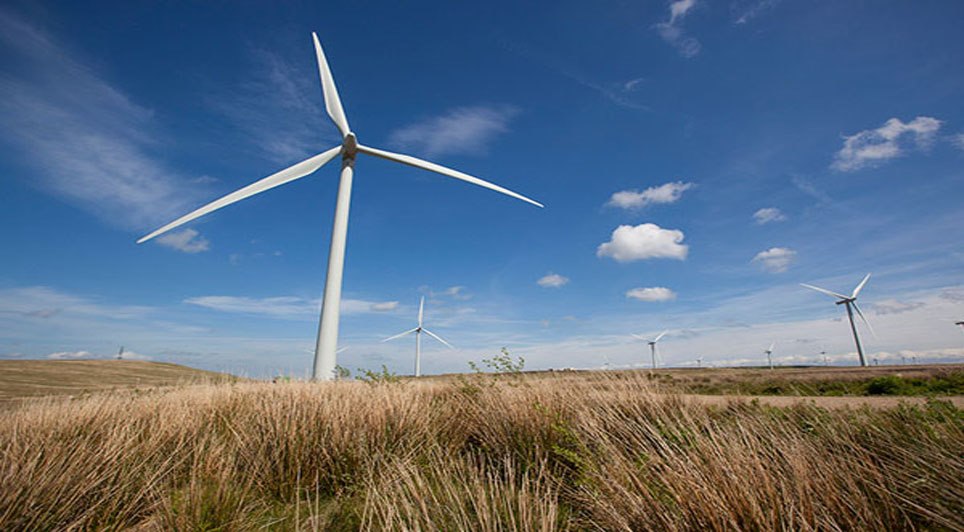 Overall electricity demand (GFEC) has declined gradually over time, falling from 9,569 GWh in the year to December 2018 to 8,865 GWh in the year to June 2026.
Total electricity generation over the period was 8,286 GWh, comprising 4,431 GWh from renewable sources (53%) and 3,855 GWh from non-renewable sources (47%). On a rolling 12-month basis, renewable generation has exceeded non-renewable generation since January 2026, reversing the pattern seen across the rest of the series back to 2018.
Within renewable output, wind accounted for the majority at 74%, followed by bioenergy (18%), solar (6%), landfill gas (1%) and hydro/tidal (1%).
Cross-border and interconnector flows vary over time. Northern Ireland recorded net imports of 578 GWh in the year to June 2026, compared with net imports of 172 GWh in the year to June 2025.
The full publication is available at: www.economy-ni.gov.uk/articles/electricity-consumption-and-renewable-generation-statistics
Following data development work, measurement and reporting now use the Gross Final Electricity Consumption (GFEC) approach. GFEC is defined as generation plus imports minus exports, and is equivalent to total electricity demand. This is the third quarterly publication on the new basis, after the first release in March 2026, with historic trend data provided back to 2018.
From July 2025 to June 2026, renewable generation totalled 4,431 GWh, equating to 50% of GFEC (8,865 GWh). That share is up from 44% in the year to June 2025 and matches the previous record high seen in late 2022/early 2023 (50%).
Total electricity generation over the period was 8,286 GWh, comprising 4,431 GWh from renewable sources (53%) and 3,855 GWh from non-renewable sources (47%). On a rolling 12-month basis, renewable generation has exceeded non-renewable generation since January 2026, reversing the pattern seen across the rest of the series back to 2018.
Within renewable output, wind accounted for the majority at 74%, followed by bioenergy (18%), solar (6%), landfill gas (1%) and hydro/tidal (1%).
Cross-border and interconnector flows vary over time. Northern Ireland recorded net imports of 578 GWh in the year to June 2026, compared with net imports of 172 GWh in the year to June 2025.
The full publication is available at: www.economy-ni.gov.uk/articles/electricity-consumption-and-renewable-generation-statistics
Related Northern Ireland News Stories
Click here for the latest headlines.
06 March 2026
Wind Power Drives NI Towards 80% Renewable Target
A new report, 'Electricity Consumption and Renewable Generation in Northern Ireland: Year ending December 2025', shows that 47% of the region's gross final electricity consumption is now powered by renewable sources.
Wind Power Drives NI Towards 80% Renewable Target
A new report, 'Electricity Consumption and Renewable Generation in Northern Ireland: Year ending December 2025', shows that 47% of the region's gross final electricity consumption is now powered by renewable sources.
14 September 2022
Over 47% Of NI's Electricity Generated By Renewable Sources
More than 47% of Northern Ireland's total electricity consumption was provided by renewable sources in the year until June 2022, according to the latest 'Electricity Consumption and Renewable Generation' report.
Over 47% Of NI's Electricity Generated By Renewable Sources
More than 47% of Northern Ireland's total electricity consumption was provided by renewable sources in the year until June 2022, according to the latest 'Electricity Consumption and Renewable Generation' report.
16 October 2013
NI Unemployment Falls
Northern Ireland's unemployment has continued to fall by 0.5% over the past quarter, according to the latest Labour Force Survey (LFS). Unemployment in Northern Ireland was estimated at 7.3% for the period June - August 2013. This is down 0.5% from the rate recorded in the previous quarter (7.8%) and 0.8% from the rate recorded one year ago (8.1%).
14 January 2004
Rise in NI unemployment figures
The number of people unemployed in Northern Ireland is on the increase according to the latest figures. Labour force statistics released on Wednesday revealed that some 46,000 people are unemployed, a rise of 3,000 on the this time last year.
Rise in NI unemployment figures
The number of people unemployed in Northern Ireland is on the increase according to the latest figures. Labour force statistics released on Wednesday revealed that some 46,000 people are unemployed, a rise of 3,000 on the this time last year.
27 June 2008
Rathlin's Big 'Switch' Pulled
Rathlin islanders are at last able to enjoy a dependable supply of electricity. Yesterday, NI Regional Development Minister Conor Murphy officially switched on a new 10.4km subsea electricity cable which extends from Ballycastle to Rathlin Island.
Rathlin's Big 'Switch' Pulled
Rathlin islanders are at last able to enjoy a dependable supply of electricity. Yesterday, NI Regional Development Minister Conor Murphy officially switched on a new 10.4km subsea electricity cable which extends from Ballycastle to Rathlin Island.
-




 Northern Ireland WeatherThis Evening and Tonight:The east will be dry with some clear spells this evening. Cloud and rain will spread to western areas, turning heavier and then extending to the east overnight. Minimum temperature 8 °C.