


16/09/2026
PSNI Calls On Young Men To Challenge Online Misogyny As
Online words have offline consequences. The Police Service of Northern Ireland, the Department of Justice and The Executive Office have launched the second phase of the Power to Change campaign, calling on boys and young men across Northern Ireland to confront misogyny in the places they spend so much time: social media, gaming platforms, group chats, comment sections and online communities.
Phase Two zeroes in on everyday digital behaviours that can normalise harmful attitudes towards women and girls. While online spaces can foster connection, friendship and creativity, they can also amplify misogyny and, in some cases, escalate to criminality.
Between 1 April 2025 and 31 March 2026, there were 1,971 reports of online stalking and harassment (a 12% year-on-year increase), 591 reports of online blackmail (up 11%), and 110 reports of the sharing of indecent images or 'revenge porn' (up 21%).
At the heart of the campaign is a challenge to young men: What type of man do you want to be? Rather than focusing only on crime, Power to Change highlights how attitudes, jokes, images and online behaviours can create environments where abuse is accepted and allowed to escalate.
The message is clear: violence, abuse, intimidation and harassment rarely start at the most serious level. Harmful attitudes often begin earlier — and everyone has the power to challenge them. Phase Two encourages men and boys to be active allies by questioning what they see online, calling out behaviour when it crosses the line, supporting people who are targeted and refusing to amplify harmful content.
Six new films will depict recognisable online and everyday scenarios designed to spark conversation and reflection, rather than simply instructing young men what to think or do. The PSNI frames them as everyday moments unfolding in group chats, gaming platforms, comment sections and social feeds.
Chief Constable Jon Boutcher said: "Power to Change has always been about prevention. Policing has an obvious role when behaviour becomes criminal, but as a society we also need to ask what happens before we reach that point.
"Words matter. Jokes matter. What we like, share and allow to go unchallenged online matters.
"This campaign isn't about blaming young men. It's about recognising the positive influence men and boys can have on each other.
"You don't need a confrontation or a big speech to make a difference. Sometimes it's questioning a comment, refusing to share something, checking in with someone who is being targeted or having a quiet word with a mate.
"Those small moments can set a different standard. We all have the Power to Change."
First Minister Michelle O'Neill said: "Power to Change is about challenging the attitudes and behaviours that can lead to violence against women and girls while empowering everyone to play their part in creating a safer society.
"This next phase brings that message into the online spaces where young people spend so much of their time. It encourages men and boys to think about what they see, say and share online, challenge misogyny whenever they encounter it and be positive allies to women and girls.
"Online words can have real-life consequences, and behind every comment, message or post is a real person. By challenging harmful attitudes, calling out misogyny and choosing respect, we can all use our power to drive lasting change and help make women and girls safer."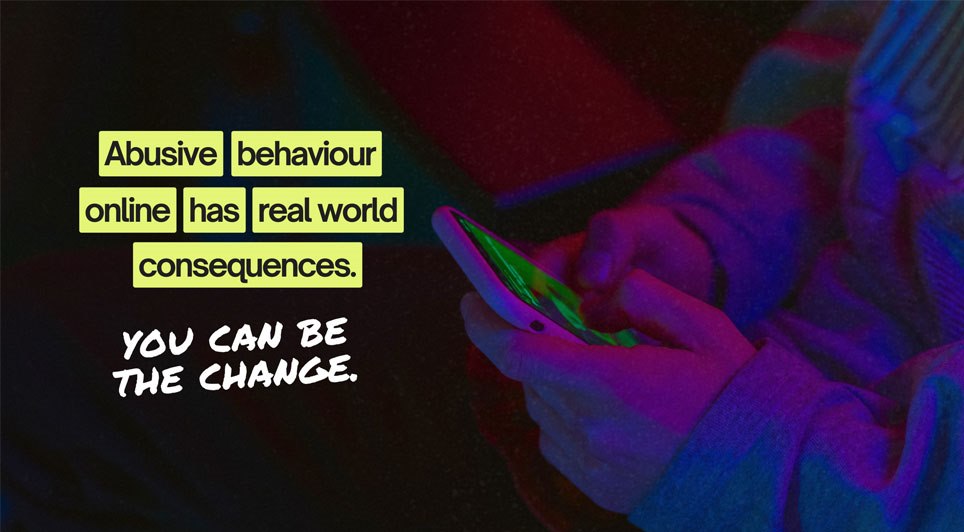 Deputy First Minister Emma Little-Pengelly said: "The Power to Change campaign is an important part of our work to prevent violence against women and girls and the focus on the online world for Phase 2 of the campaign is vital.
"We all know that what happens online does not stay online. Ideas influence attitudes, attitudes influence behaviour, and behaviour affects real lives which is why I would encourage everyone to engage with the campaign's message and use it as an opportunity to start conversations about respect, healthy relationships and the role we can all play in creating positive change.
"Whether it's challenging a harmful comment, refusing to share harmful content, or supporting someone who has been targeted, small actions make a real difference and I have no doubt this campaign will make an impact."
Justice Minister Naomi Long said: "Social media offers incredible opportunities to learn, connect, and share ideas. However, it can also be a place where harmful attitudes and behaviours spread quickly. Online misogyny, discrimination, hatred, or prejudice directed towards women and girls, can normalise disrespect, fuel harassment, and create environments where abuse is tolerated. I therefore warmly welcome phase two of the Power to Change campaign and its focus on challenging inappropriate online content and behaviours".
A refreshed Power to Change website underpins this phase with practical, youth-focused resources. New content helps users understand and challenge the 'manosphere' and harmful gender narratives, explore positive ideas of masculinity through 'Man to Man' conversations, and consider how online sexual content can shape attitudes towards relationships, consent and women and girls. It also offers guidance on navigating emerging technologies such as AI and warns about consuming harmful material, including extreme pornography.
The campaign urges people not to consume online content passively, but to question it, think before sharing and recognise the impact of their own actions.
To underline the real-world stakes, the campaign highlights the experience of 19-year-old student Jodie Morrow, who matched with 25-year-old Ezra Garfield — then known as Riagain Grainger — on a dating app in March 2020 while studying in Belfast. After a few dates, Ezra disclosed he was on bail for a previous case, later resulting in a sentence; Jodie immediately ended contact. The harassment that followed included persistent calls and messages, and disturbing images sent by Garfield's supposed 'friends' — though he was behind it all. He also lied to police, claiming he and Jodie were still in a relationship and lodging false counter-allegations. In February, he was jailed for 19 months, with a further 19 months on supervised licence, for stalking involving serious harm and distress.
Since then, Jodie has worked with the PSNI to enhance training and understanding of online harassment cases and is speaking at today's launch as an advocate for Power to Change.
She says: "Ultimately, my case began with a man unable to take rejection. His entitlement and sense of ownership over me, despite being in the early days of getting to know each other, laid the groundwork for four months of harassment.
"There is no simple solution to tackle violence, abuse, intimidation and harassment of women and girls, but hopefully this campaign will continue to challenge attitudes and move the needle towards a safer society for all of us."
Find out more at: powertochange.info/
Phase Two zeroes in on everyday digital behaviours that can normalise harmful attitudes towards women and girls. While online spaces can foster connection, friendship and creativity, they can also amplify misogyny and, in some cases, escalate to criminality.
Between 1 April 2025 and 31 March 2026, there were 1,971 reports of online stalking and harassment (a 12% year-on-year increase), 591 reports of online blackmail (up 11%), and 110 reports of the sharing of indecent images or 'revenge porn' (up 21%).
At the heart of the campaign is a challenge to young men: What type of man do you want to be? Rather than focusing only on crime, Power to Change highlights how attitudes, jokes, images and online behaviours can create environments where abuse is accepted and allowed to escalate.
The message is clear: violence, abuse, intimidation and harassment rarely start at the most serious level. Harmful attitudes often begin earlier — and everyone has the power to challenge them. Phase Two encourages men and boys to be active allies by questioning what they see online, calling out behaviour when it crosses the line, supporting people who are targeted and refusing to amplify harmful content.
Six new films will depict recognisable online and everyday scenarios designed to spark conversation and reflection, rather than simply instructing young men what to think or do. The PSNI frames them as everyday moments unfolding in group chats, gaming platforms, comment sections and social feeds.
Chief Constable Jon Boutcher said: "Power to Change has always been about prevention. Policing has an obvious role when behaviour becomes criminal, but as a society we also need to ask what happens before we reach that point.
"Words matter. Jokes matter. What we like, share and allow to go unchallenged online matters.
"This campaign isn't about blaming young men. It's about recognising the positive influence men and boys can have on each other.
"You don't need a confrontation or a big speech to make a difference. Sometimes it's questioning a comment, refusing to share something, checking in with someone who is being targeted or having a quiet word with a mate.
"Those small moments can set a different standard. We all have the Power to Change."
First Minister Michelle O'Neill said: "Power to Change is about challenging the attitudes and behaviours that can lead to violence against women and girls while empowering everyone to play their part in creating a safer society.
"This next phase brings that message into the online spaces where young people spend so much of their time. It encourages men and boys to think about what they see, say and share online, challenge misogyny whenever they encounter it and be positive allies to women and girls.
"Online words can have real-life consequences, and behind every comment, message or post is a real person. By challenging harmful attitudes, calling out misogyny and choosing respect, we can all use our power to drive lasting change and help make women and girls safer."
"We all know that what happens online does not stay online. Ideas influence attitudes, attitudes influence behaviour, and behaviour affects real lives which is why I would encourage everyone to engage with the campaign's message and use it as an opportunity to start conversations about respect, healthy relationships and the role we can all play in creating positive change.
"Whether it's challenging a harmful comment, refusing to share harmful content, or supporting someone who has been targeted, small actions make a real difference and I have no doubt this campaign will make an impact."
Justice Minister Naomi Long said: "Social media offers incredible opportunities to learn, connect, and share ideas. However, it can also be a place where harmful attitudes and behaviours spread quickly. Online misogyny, discrimination, hatred, or prejudice directed towards women and girls, can normalise disrespect, fuel harassment, and create environments where abuse is tolerated. I therefore warmly welcome phase two of the Power to Change campaign and its focus on challenging inappropriate online content and behaviours".
A refreshed Power to Change website underpins this phase with practical, youth-focused resources. New content helps users understand and challenge the 'manosphere' and harmful gender narratives, explore positive ideas of masculinity through 'Man to Man' conversations, and consider how online sexual content can shape attitudes towards relationships, consent and women and girls. It also offers guidance on navigating emerging technologies such as AI and warns about consuming harmful material, including extreme pornography.
The campaign urges people not to consume online content passively, but to question it, think before sharing and recognise the impact of their own actions.
To underline the real-world stakes, the campaign highlights the experience of 19-year-old student Jodie Morrow, who matched with 25-year-old Ezra Garfield — then known as Riagain Grainger — on a dating app in March 2020 while studying in Belfast. After a few dates, Ezra disclosed he was on bail for a previous case, later resulting in a sentence; Jodie immediately ended contact. The harassment that followed included persistent calls and messages, and disturbing images sent by Garfield's supposed 'friends' — though he was behind it all. He also lied to police, claiming he and Jodie were still in a relationship and lodging false counter-allegations. In February, he was jailed for 19 months, with a further 19 months on supervised licence, for stalking involving serious harm and distress.
Since then, Jodie has worked with the PSNI to enhance training and understanding of online harassment cases and is speaking at today's launch as an advocate for Power to Change.
She says: "Ultimately, my case began with a man unable to take rejection. His entitlement and sense of ownership over me, despite being in the early days of getting to know each other, laid the groundwork for four months of harassment.
"There is no simple solution to tackle violence, abuse, intimidation and harassment of women and girls, but hopefully this campaign will continue to challenge attitudes and move the needle towards a safer society for all of us."
Find out more at: powertochange.info/
Related Northern Ireland News Stories
Click here for the latest headlines.
13 June 2016
NI Businesses Lose Over £2m Following Online Crime
Firms in Northern Ireland lost over £2 million following online crime last year, according to new figures. Figures from Get Safe Online and Action Fraud show 247 cases were reported with total losses amounting to £2,152,343 between March 2015 and March 2016. However, police believe the overall losses could be higher.
02 October 2017
Investigation Launched After Power Plant Explosion
An investigation has launched after an explosion at a biomass power plant in Co L'Derry. The incident happened at the Lishally biomass power plant on Sunday, 01 October. A steam pipe is believed to have ruptured and caused significant damage to a boiler room. Emergency services attended the scene.
26 January 2018
Over 200 Jobs Under Threat At Kilroot Power Station
Kilroot Power Station in Carrickfergus is facing a possible closure after it failed to win a major contract. Over 200 jobs are at risk and the plant faces closure at the end of May.
Over 200 Jobs Under Threat At Kilroot Power Station
Kilroot Power Station in Carrickfergus is facing a possible closure after it failed to win a major contract. Over 200 jobs are at risk and the plant faces closure at the end of May.
20 March 2025
Top 5 Most Popular Online Table Games in NI
Online casino gambling is consistently growing in popularity in Northern Ireland, particularly in classic casino games like table and card games. With a growing number of licensed and reputable online gaming sites like Betiton Casino, online table games are more accessible than ever.
02 April 2026
Man Charged Over Threatening Online Messages To Local Representative
Police have charged a man following an investigation into threatening online messages sent to a local elected representative on Friday 27 March. The 30-year-old has been charged with several offences, including improper use of a public communications network and threatening or abusive behaviour.
-




 Northern Ireland WeatherToday:Mainly dry in the southeast at first, otherwise bright or sunny spells and a few scattered showers through the day. Winds will be moderate west or northwesterlies. Maximum temperature 13 °C.Tonight:Most places will be dry with clear spells this evening and overnight, although a few light showers remain possible at first. Turning rather cold with light winds. Minimum temperature 3 °C.