


16/07/2026
Trust Outlines Steps To Speed Up Patient Flow At Daisy Hill Hospital
New same-day care options, assessment units and enhanced discharge support are helping to ease Emergency Department pressures at Daisy Hill Hospital.
Following publication of the Department of Health's most recent Emergency Department waiting-time statistics, the Trust highlighted sustained work to improve how patients move through Daisy Hill Hospital and to enhance the overall experience of urgent and unscheduled care.
Ms Burke said: "With sustained demand across health and social care services regionally, our staff continue to provide safe and effective timely emergency care to our patients. Staff strive to ensure patients privacy and dignity is maintained at all time.
"Through our Timely Care approach, we are working hard to improve patients' experience of urgent and unscheduled care, while supporting better flow across hospital and community services.
"We are doing everything we can to reduce pressure on our busy Emergency Department and have implemented a number of initiatives to expand services that help avoid hospital admission and improve patient flow through our system.
"Reducing unnecessary time spent in hospital, where it is safe to do so, remains an important priority for the Trust. We want to ensure patients receive the right care at the right time and are supported to return home, or move to the most appropriate setting, as soon as they no longer require acute hospital care.
"We have a fantastic clinical team at Daisy Hill, supported by essential administrative and support services, all of whom are committed to providing the best possible care for our patients."
The Chief Operating Officer said Daisy Hill performs strongly against Emergency Department quality indicators, including time to be seen by a clinician and response time to time-critical conditions such as sepsis. The hospital also does well in discharging patients with less complex needs.
"This reflects the strong working relationships between hospital teams, NIAS, community services and partner organisations receiving patients in ED and in progressing discharge arrangements as quickly and safely as possible," she said.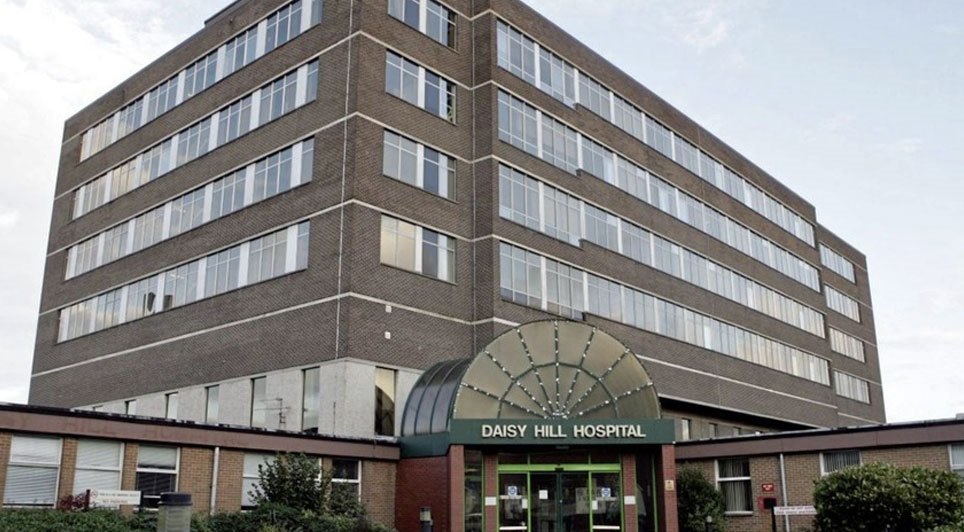 Over the last 18 months, the Trust has introduced a range of measures to improve patient flow at Daisy Hill, including:
- A Clinical Decision Unit and Short Stay Ward within the Emergency Department for short-term observation, investigation and treatment.
- A Frailty at the Front Door service to rapidly assess and treat older people.
- An Acute Ambulatory Unit delivering same-day treatment to reduce ED attendances and avoid admissions.
- A discharge lounge and a dedicated discharge expeditor to help medically fit patients leave hospital promptly.
- A 19-bed Acute Medical Unit.
- Enhancements to the Day Clinical Centre service.
Mrs Burke also appealed for continued public support to help prioritise those most in need of urgent care.
"We greatly appreciate the tremendous public support for Daisy Hill Hospital and ask our local community for continued help to ensure that everyone receives the care they need, when they need it most.
"It is essential that patients leave hospital, and that families support discharge arrangements, as soon as their loved one is medically fit, where they are able to do so.
"Every occupied bed may be needed by another sick patient waiting in the Emergency Department. In some cases, this may mean accepting an alternative care package or care home placement while a preferred longer-term option becomes available."
She added: "Research shows that prolonged hospital stays can lead to deconditioning, loss of independence and an increased risk of confusion, falls and infection.
"We encourage patients and families to work closely with our rehabilitation teams, who are leading efforts to keep patients mobile and independent during their hospital stay. This helps ensure they can return home as soon as they are medically fit and enjoy the best possible quality of life."
Advice on accessing the right care:
- Call 999 if someone is acutely unwell and only use the Emergency Department for serious symptoms needing hospital care.
- Phone First before travelling to an Emergency Department or Minor Injuries Unit with less urgent symptoms (Monday to Friday, 9am–9pm): 0300 123 3 111.
- Consider whether a pharmacist or your GP can treat your condition. If it cannot wait until your GP surgery reopens, contact Urgent Care (GP) Out of Hours on 028 3839 9201.
Following publication of the Department of Health's most recent Emergency Department waiting-time statistics, the Trust highlighted sustained work to improve how patients move through Daisy Hill Hospital and to enhance the overall experience of urgent and unscheduled care.
Ms Burke said: "With sustained demand across health and social care services regionally, our staff continue to provide safe and effective timely emergency care to our patients. Staff strive to ensure patients privacy and dignity is maintained at all time.
"Through our Timely Care approach, we are working hard to improve patients' experience of urgent and unscheduled care, while supporting better flow across hospital and community services.
"We are doing everything we can to reduce pressure on our busy Emergency Department and have implemented a number of initiatives to expand services that help avoid hospital admission and improve patient flow through our system.
"Reducing unnecessary time spent in hospital, where it is safe to do so, remains an important priority for the Trust. We want to ensure patients receive the right care at the right time and are supported to return home, or move to the most appropriate setting, as soon as they no longer require acute hospital care.
"We have a fantastic clinical team at Daisy Hill, supported by essential administrative and support services, all of whom are committed to providing the best possible care for our patients."
The Chief Operating Officer said Daisy Hill performs strongly against Emergency Department quality indicators, including time to be seen by a clinician and response time to time-critical conditions such as sepsis. The hospital also does well in discharging patients with less complex needs.
"This reflects the strong working relationships between hospital teams, NIAS, community services and partner organisations receiving patients in ED and in progressing discharge arrangements as quickly and safely as possible," she said.
- A Clinical Decision Unit and Short Stay Ward within the Emergency Department for short-term observation, investigation and treatment.
- A Frailty at the Front Door service to rapidly assess and treat older people.
- An Acute Ambulatory Unit delivering same-day treatment to reduce ED attendances and avoid admissions.
- A discharge lounge and a dedicated discharge expeditor to help medically fit patients leave hospital promptly.
- A 19-bed Acute Medical Unit.
- Enhancements to the Day Clinical Centre service.
Mrs Burke also appealed for continued public support to help prioritise those most in need of urgent care.
"We greatly appreciate the tremendous public support for Daisy Hill Hospital and ask our local community for continued help to ensure that everyone receives the care they need, when they need it most.
"It is essential that patients leave hospital, and that families support discharge arrangements, as soon as their loved one is medically fit, where they are able to do so.
"Every occupied bed may be needed by another sick patient waiting in the Emergency Department. In some cases, this may mean accepting an alternative care package or care home placement while a preferred longer-term option becomes available."
She added: "Research shows that prolonged hospital stays can lead to deconditioning, loss of independence and an increased risk of confusion, falls and infection.
"We encourage patients and families to work closely with our rehabilitation teams, who are leading efforts to keep patients mobile and independent during their hospital stay. This helps ensure they can return home as soon as they are medically fit and enjoy the best possible quality of life."
Advice on accessing the right care:
- Call 999 if someone is acutely unwell and only use the Emergency Department for serious symptoms needing hospital care.
- Phone First before travelling to an Emergency Department or Minor Injuries Unit with less urgent symptoms (Monday to Friday, 9am–9pm): 0300 123 3 111.
- Consider whether a pharmacist or your GP can treat your condition. If it cannot wait until your GP surgery reopens, contact Urgent Care (GP) Out of Hours on 028 3839 9201.
Related Northern Ireland News Stories
Click here for the latest headlines.
22 March 2022
£5m Announced For NI's Care Home Sector
A £5 million support package has been announced to help Northern Ireland's care home sector with rising energy costs. Care homes, like the rest of society, have been dealing with sharply rising energy prices. The £5m funding will be allocated by HSC Trusts on the basis of bed numbers per home.
£5m Announced For NI's Care Home Sector
A £5 million support package has been announced to help Northern Ireland's care home sector with rising energy costs. Care homes, like the rest of society, have been dealing with sharply rising energy prices. The £5m funding will be allocated by HSC Trusts on the basis of bed numbers per home.
29 July 2019
Job Prospects For Unemployed With Care Home Training Scheme
A care home group is offering job opportunities for the unemployed in Belfast following completion of a four-week training programme. Macklin Care Homes, which operates six homes in Northern Ireland, has developed a scheme to equip unemployed members of society with recognised qualifications in health and social care skills.
Job Prospects For Unemployed With Care Home Training Scheme
A care home group is offering job opportunities for the unemployed in Belfast following completion of a four-week training programme. Macklin Care Homes, which operates six homes in Northern Ireland, has developed a scheme to equip unemployed members of society with recognised qualifications in health and social care skills.
11 March 2003
Primary care must be strengthened says Browne
The role of primary care has to be strengthened and expanded, NIO Health Minister Des Browne has told delegates at the ‘Primary Care-Moving Forward’ conference in Armagh today.
Primary care must be strengthened says Browne
The role of primary care has to be strengthened and expanded, NIO Health Minister Des Browne has told delegates at the ‘Primary Care-Moving Forward’ conference in Armagh today.
20 June 2025
New Urgent Care Centre Officially Opens At Ulster Hospital
Health Minister Mike Nesbitt has officially opened the new Urgent Care Centre (UCC) at the Ulster Hospital, marking a significant development for unscheduled care services in the South Eastern Health and Social Care Trust area.
New Urgent Care Centre Officially Opens At Ulster Hospital
Health Minister Mike Nesbitt has officially opened the new Urgent Care Centre (UCC) at the Ulster Hospital, marking a significant development for unscheduled care services in the South Eastern Health and Social Care Trust area.
28 April 2011
Waiting Times For A&E Reduced
Waiting times for patients in NI's accident and emergency care facilities have been revealed. The Department of Health, Social Services and Public Safety (DHSSPS) has just published statistics on the time spent waiting in emergency care departments within Northern Ireland during the months of January, February and March 2011.
Waiting Times For A&E Reduced
Waiting times for patients in NI's accident and emergency care facilities have been revealed. The Department of Health, Social Services and Public Safety (DHSSPS) has just published statistics on the time spent waiting in emergency care departments within Northern Ireland during the months of January, February and March 2011.
-




 Northern Ireland WeatherToday:Variable amounts of cloud and some bright or sunny spells. There will be scattered showers, these becoming fewer later in the afternoon. Windy with fresh occasionally strong westerly winds. Maximum temperature 16 °C.Tonight:Mainly dry this evening with just the odd passing shower. Then the rest of the night will be dry. Westerly winds easing down, but remaining fresh along the north coast. Minimum temperature 11 °C.